


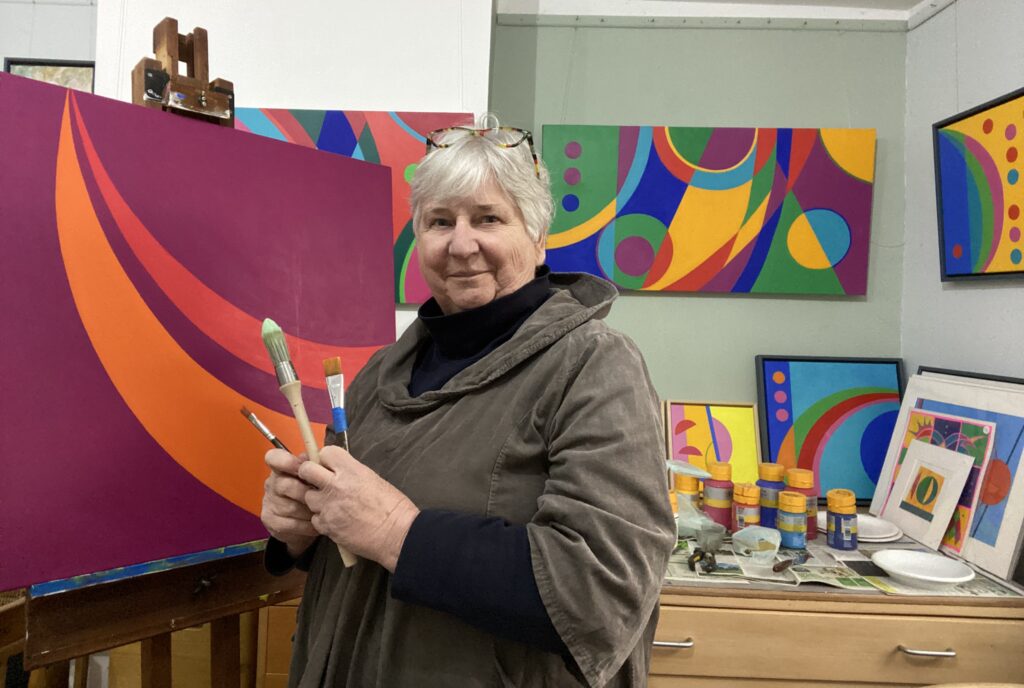
- Structure and shape can be the building blocks of any great work of art, however the composition does not always have to be representational. :
Our Head of Art Luke Baker, recently had the pleasure of sitting down with Little Van Gogh artist Andrea Jenkins to discuss how she hopes that her art can offer an escape from the worries of the world. “It’s a joyful celebration, a party full of colour music and dancing!”.
Where do you find inspiration?
The main inspiration is the exhilaration of placing intensely bright colours beside each other in different proportions, shapes and compositions to create rhythm and mood. I often begin a composition with broad curves and circles using the natural gesture of the arc made by my outstretched arm and the articulation of shoulder and elbow joints. These compositions are then refined and disturbed with straight lines, smaller circles, arcs and segments. Sometimes making small collages or a session of printmaking might be the starting point of a series of larger works. Music and dance often plays a part in the process of developing an idea but I also expect that noticing the sometimes surprising colours in nature also feeds into my ideas (e.g. intense magenta grass stems against apple green leaves). I don’t respond to these inspirations through recording from direct observation anymore; it is the remembered essence that feeds my work.
How has your practice changed over time?
Like many abstract painters my early practice was figurative. I have worked through a range of styles while recording the physical world as I have always enjoyed exploring processes and materials to express what I saw. It has taken five decades to reach the stage of paring back the shapes and colours of the physical world to the bare essentials and then to composing them with no visual reference. Now I make non-objective abstract art and am still exploring process, colour and composition.

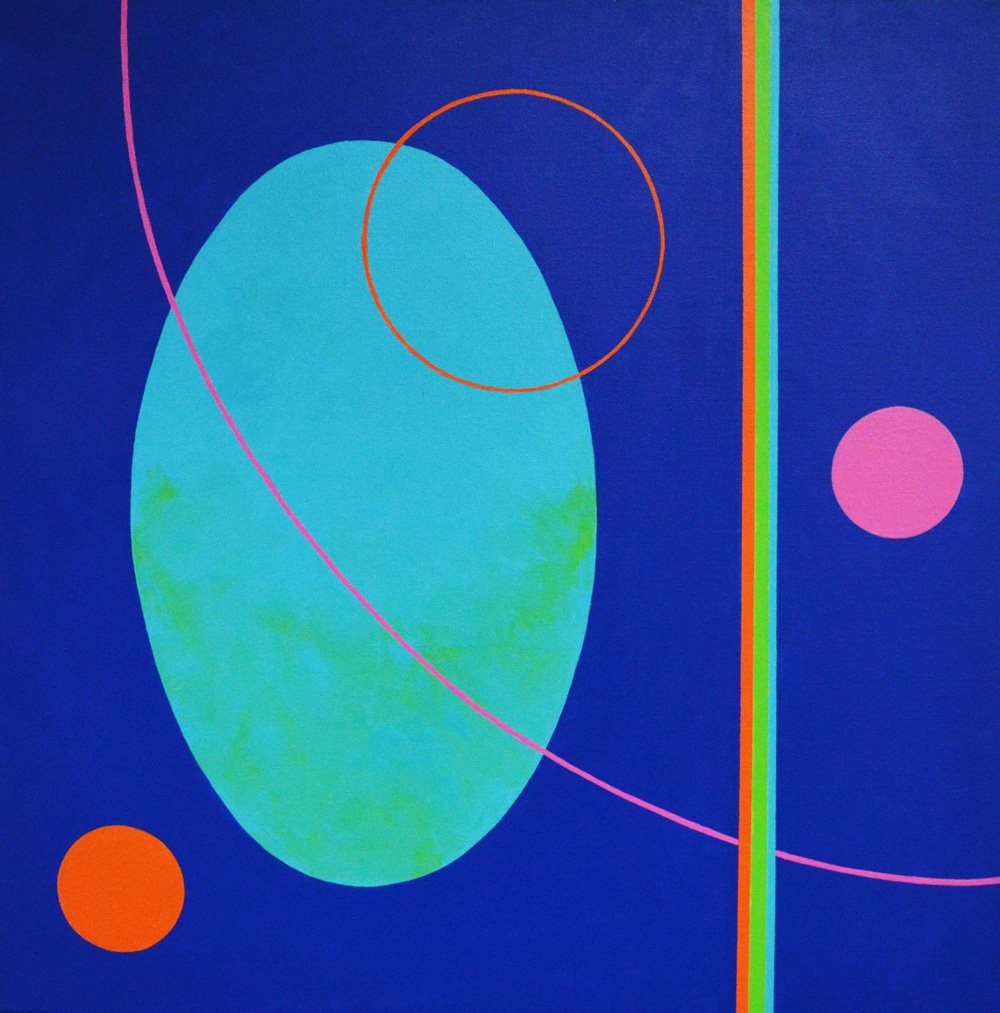
Ronde

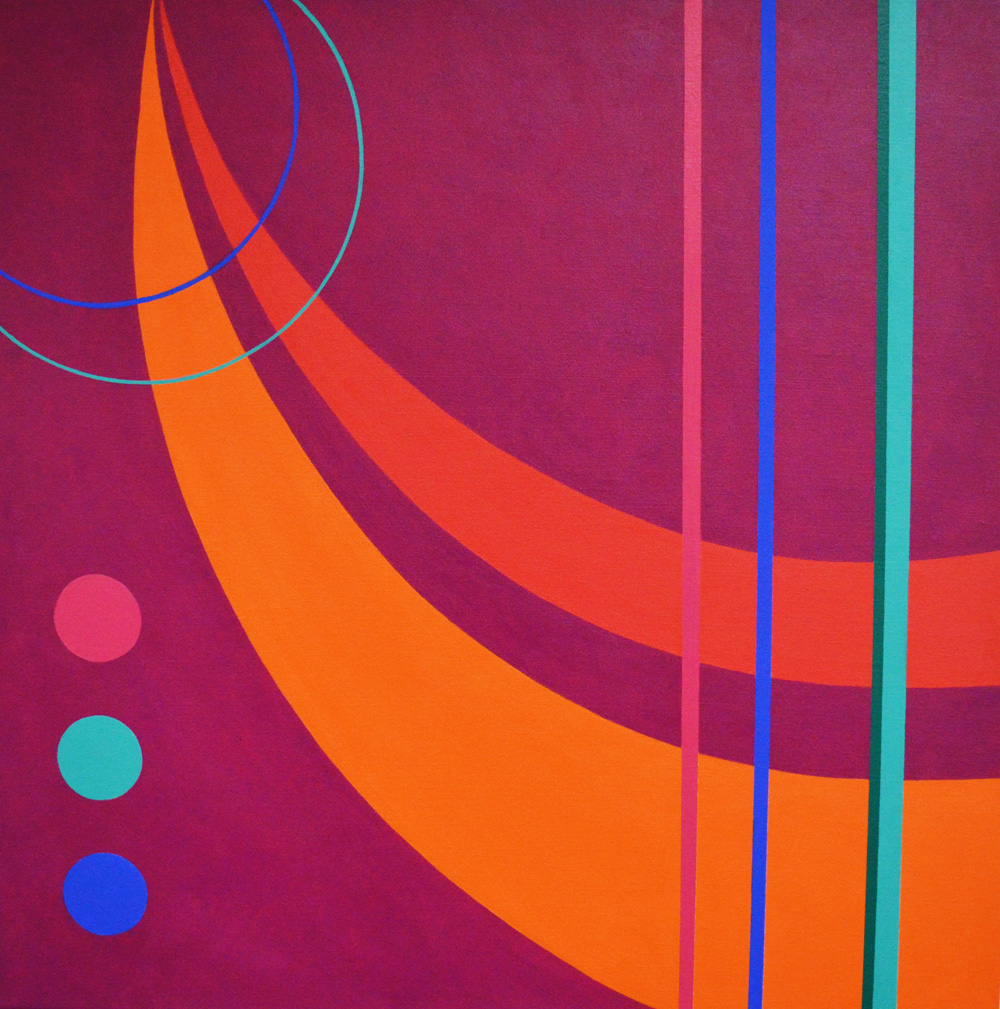
Barrida
Who are your biggest artistic influences?
I don’t set out to emulate any artist’s work but I recognise the subconscious influence of the early abstract artists from the Bauhaus (Kandinsky, Paul Klee, Albers), Constructivism (Malevich, Popova) as well as mid 20th Century abstract artists such as Bridget Riley, Howard Hodgkins, Patrick Heron, Sean Scully and Terry Frost. Broadening the influence to performing arts then mid century jazz (Dave Brubeck, MJQ), Cuban jazz, Afro jazz, Reggae and Latin American dance all play a part in the making.
What’s the purpose or goal of your work?
It’s all about enjoyment, my own and hopefully for those who see it. It offers an escape from the worries of the world. It’s a joyful celebration, a party full of colour, music and dancing!
Does creating art help you in any other areas of your life?
Creating art has always been my raison être. I am at my most content when I am in my studio creating art. It’s a great excuse not to do housework!
What’s the best piece of advice you have ever been given?
When I was a teenager I was upset when my Dad criticised a drawing I showed him. He mollified me by telling me that when your work of art is criticised it is not personal. He said that your art is your child while you are creating it but once finished and shown to the world it is independent of you, just as your adult child is. I have offered this advice to many a young student over the years when they have reacted as I did.